This is default featured slide 1 title

Go to Blogger edit html and find these sentences.Now replace these sentences with your own descriptions.This theme is Bloggerized by Lasantha Bandara - Premiumbloggertemplates.com.

This is default featured slide 2 title

Go to Blogger edit html and find these sentences.Now replace these sentences with your own descriptions.This theme is Bloggerized by Lasantha Bandara - Premiumbloggertemplates.com.

This is default featured slide 3 title

Go to Blogger edit html and find these sentences.Now replace these sentences with your own descriptions.This theme is Bloggerized by Lasantha Bandara - Premiumbloggertemplates.com.

This is default featured slide 4 title

Go to Blogger edit html and find these sentences.Now replace these sentences with your own descriptions.This theme is Bloggerized by Lasantha Bandara - Premiumbloggertemplates.com.

This is default featured slide 5 title

Go to Blogger edit html and find these sentences.Now replace these sentences with your own descriptions.This theme is Bloggerized by Lasantha Bandara - Premiumbloggertemplates.com.

Senin, 31 Juli 2017

Download PDF Sailing Fundamentals, by Gary Jobson

Download PDF Sailing Fundamentals, by Gary Jobson

Wander off at home or workplace, you can take it conveniently. Just by connecting to the internet as well as obtain the link to download and install, you expectation to obtain this publication is understood. This is just what makes you really feel pleased to overcome the Sailing Fundamentals, By Gary Jobson to read. This readable publication includes very easy languages for analysis by all individuals. So, you may not should feel clinically depressed to discover guide as great for you. Simply decide your time to get the book and find the suggestion for some other books right here.

Sailing Fundamentals, by Gary Jobson

Sailing Fundamentals, by Gary Jobson


Sailing Fundamentals, by Gary Jobson


Download PDF Sailing Fundamentals, by Gary Jobson

Discover the technique of doing something from lots of resources. Among them is this publication entitle Sailing Fundamentals, By Gary Jobson It is an effectively known publication Sailing Fundamentals, By Gary Jobson that can be suggestion to review currently. This advised publication is among the all wonderful Sailing Fundamentals, By Gary Jobson compilations that remain in this website. You will certainly also find various other title and also motifs from various authors to browse right here.

The book that benefits you has some qualities. One of them is that they have similar topics or styles with the important things that you need. Guide will be additionally worried about the new ideas and believed to be always current. Guide, will certainly also constantly provide you new experience and also fact. Even you are not the professional of the subject relevant, you can be much better downplaying from reading the book. Yeah, this is exactly what the Sailing Fundamentals, By Gary Jobson will certainly offer to you.

This is not about how a lot this e-book Sailing Fundamentals, By Gary Jobson prices; it is not additionally regarding what kind of book you truly love to check out. It is for just what you could take and also receive from reading this Sailing Fundamentals, By Gary Jobson You can choose to pick other e-book; yet, it does not matter if you try to make this e-book Sailing Fundamentals, By Gary Jobson as your reading choice. You will certainly not regret it. This soft file publication Sailing Fundamentals, By Gary Jobson can be your excellent buddy in any sort of instance.

And also the reasons why you must pick this recommended publication is that it's created by a preferred writer in the world. You may not have the ability to get this publication conveniently; this is why we offer you right here to reduce. Being easy to obtain the book to check out really becomes the initial step to finish. In some cases, you will certainly face problems in finding the Sailing Fundamentals, By Gary Jobson outside. However here, you won't face that trouble.

Sailing Fundamentals, by Gary Jobson

About the Author

Gary Jobson lives in Annapolis, Maryland.

Read more

Excerpt. © Reprinted by permission. All rights reserved.

Chapter 1ASHORE KNOWLEDGEALL ABOUT BOATSPROPULSION TYPESRecreational boats are designed to use one or more of three propulsion types. Selfpropelled vessels, including kayaks, rowboats, rafts, and canoes, are designed to be propelled by people using paddles, oars, or poles. Power-driven vessels (powerboats) typically use gasoline or diesel motors for propulsion. Sailing vessels (sailboats) are wind powered, using sails to capture the wind's power (see below).Powerboat -- a recreational boat typically powered by a gasoline or diesel engine. Powerboats may be subdivided into several types, including utility boats (prams, skiffs, dinghies, inflatables, and utility outboards), runabouts (bowriders, open fishermen, center consoles), cruisers (trawlers, houseboats, larger sportfishing vessels), pontoon boats, and personal watercraft (PWC). Each type has certain uses, characteristics, and limitations. Utility boats, for example, are used as tenders for larger craft and as platforms for fishing and hunting in protected waters. Because utility boats are generally small with limited stability, boaters should enter them carefully to avoid overloading. Caution should also be exercised when moving within these boats to avoid tipping them over. Runabouts are generally fast, maneuverable craft, used for fishing, hunting, cruising, and waterskiing. Cruisers are generally larger, more seaworthy (except for houseboats) craft, equipped with berths (sleeping areas), a head (marine toilet), galley (marine kitchen), and other facilities necessary for living aboard. Powerboats are subject to particular navigation rules and have specific responsibilities under those rules.Personal Watercraft -- also called "water scooters" as well as a variety of trade names. They are highly maneuverable, fast, fun-to-operate, low-cost, power-driven (jet drive) craft capable of operation in very shallow water. Many PWC are designed for one person, but larger models are available for use by two or three people. PWC are not toys and are governed by navigation rules applicable to power-driven vessels. In addition, most states and many localities have established specific laws that regulate PWC activities, such as prohibition of night operations, speed limitations, prohibitions of specific activities (e.g., wake jumping), limitations on operator age, and education requirements. These popular craft have unique operating capabilities (e.g., high speed, shallow draft), but are also subject to limitations. For example, PWC are steered by altering (via handlebars) the direction of the jet drive, and if power is not applied, steering is lost (the so-called off-throttle steering problem). Operators who are unfamiliar with this design feature may have difficulty controlling the vessel. PWC are designed for operation in relatively calm waters, have limited fuel capacity, and are not highly stable or maneuverable at slow speeds.PWC operators often focus their attention on nearby waves or wakes, which can impair their ability to maintain a proper lookout. Operators of other vessels should exercise caution when operating in the vicinity of PWC to minimize the likelihood of collision.Persons using PWC can expect to be thrown into the water and should wear personal flotation devices (PFDs) suitable for PWC use. The ability to swim and knowing how to reboard a PWC from the water are also essential. Many PWC are equipped with engine kill switches rigged to shut the engine off if the riders are thrown from the craft. Fuel management is very important for PWC. Not all PWC are equipped with fuel gauges. Instead, they have reserve tanks and riders need to know how to switch to the reserve tanks and must know the PWC's endurance when using the reserve tanks. Weight and balance are important for PWC operators. Thorough familiarity with owners' manuals and strict adherence to the published limitations are essential. Finally, it is important that operators of PWC (as well as other craft) display environmental sensitivity. Operations in shallow water areas may disturb a fragile ecosystem and its inhabitants.Sailing Vessel -- as noted above, this is a wind-powered vessel that uses only sails for power. Many sailboats are also equipped with gas or diesel motors for use (either as primary or supplemental power) when winds are light or from the wrong direction, for docking or other precise maneuvering, and for operation in waters (e.g., certain canals) where use of sails is prohibited. A sailboat is a power-driven vessel, as defined in the navigation rules, when the motor is in operation, and must observe regulations applicable to this type of vessel. When powered solely by sail, a sailboat is termed a sailing vessel and is subject to other specific regulations and (because of its limited maneuverability) enjoys certain privileges under the navigation rules. Various types of sailboat are discussed later in this text.Sailboard -- a modified surfboard with a mast attached that holds a sail and is capable of swiveling. They are one-person craft, so the "skipper" operates the sail, steers, and acts as lookout. Visibility on these highspeed craft may be limited when the operator is positioned behind the sail. Skippers of other craft should understand this limitation and exercise caution when operating in the vicinity of sailboards.HULLThe hull is the basic boat minus the rigging. The hull comprises the bottom, topsides, buoyancy tanks, and deck. One way to classify boats is based on hull design. Displacement-hull boats move through the water and push it aside or displace it. Planing-hull vessels move faster and, after gaining speed, ride more nearly on top of the water. All boats at rest or moving slowly are displacement boats. Each displaces a volume of water equal in weight to its own weight when operating in displacement mode.A displacement-hull vessel always displaces a volume of water equal to its own weight, regardless of its speed. At slow speeds, it is easy for a displacement-hull boat to push the water aside, forming a bow wave. As speed increases, the bow wave becomes higher and the boat tries to climb it. But the boat is not designed to do this so there is a practical limit to its speed. Displacement vessels with longer waterlines have the capability of attaining higher speeds as long as they have adequate power. Most sailboats (except sailboards and certain other light-weight boats such as racing dinghies), tugs, freighters, and true trawlers are displacement-hull vessels. The theoretical upper limit (the hull speed) of a displacement hull can be calculated with relative precision. Hull speed in knots (nautical miles per hour) is approximately 1.34 times the square root of the waterline length in feet. Thus, a displacement-hull vessel with a waterline length of 36 feet has a maximum speed of approximately 8 knots (9.2 statute miles per hour). Despite their slow speed, displacement-hull vessels have many advantages and special uses. They are steady and comfortable and can handle rougher water than their planing hull cousins (see below). Engine-powered displacement-hull vessels are typically highly fuel efficient.Above hull-speed a planing-hull vessel rides on its bow wave or "on-plane." When planing, it uses most of its power to move forward instead of pushing the water aside and displaces a volume of water less than its own weight. Generally, flatter hull bottoms allow boats to plane more easily. Runabouts, speedboats, sportfishing boats, and PWC are examples of planing-hull vessels. Powerdriven planing-hull vessels are generally less fuel efficient than displacement-hull vessels of comparable size and weight.As the name implies, a semidisplacement hull has both displacement and planing characteristics. Up to a certain power and speed, a semidisplacement hull behaves as a displacement hull. Beyond that point, the hull can rise to a partial plane. Increasing the power of a semidisplacement hull vessel increases its speed. It never gets fully "on top," however, and is not as fast as a vessel with a true planing hull. Most trawlers and many cruisers fit into this category.Multihull vessels include sailing catamarans (two hulls) and trimarans (three hulls). Although technically a displacement-hull vessel, a multihull is able to escape the restriction of hull speed because the narrow hulls create very little wave resistance and because this type of vessel typically carries a great deal of sail. These boats may be difficult to maneuver at docking speeds because they lack the momentum that heavier, ballasted boats use to maintain forward motion.There is no single, all-purpose, perfect hull design. Boat builders strive to find a happy compromise among conflicting design objectives.THE BASIC BOATLearning to sail is rather like going to a foreign country. Everyone seems to speak a different language. But don't let this trouble you, for the language will soon become familiar. Once you cast off from shore, your boat becomes a self-contained world. To function within that world you need to learn the parts of your boat and their uses. Go over them often so there is no question in your mind.Keel -- a weighted fin that, when attached to the bottom of a sailboat, keeps the boat from slipping sideways in the water and allows it to sail upwind.Centerboard -- A sailboat without a keel may have a centerboard. A centerboard is a wooden or metal fin housed in a centerboard trunk that serves the same purpose as a keel. It can be lowered to overcome the boat's lateral motion.Beam -- the maximum width of the hull.Deck -- the horizontal upper surface of the boat.Stern -- the back of the boat.Bow -- the front of the boat.Aft, after -- toward the stern.Forward -- toward the bow.Windward -- toward the wind.Leeward -- away from the wind.Aloft -- overhead.Rudder -- the fin at the stern of the boat used for steering.Tiller -- the wooden or metal steering arm attached to the rudder. It is used as a lever to turn the rudder.Tiller extension -- a wooden or metal pivoting extension attached to the tiller. It is usually found in dinghies and enables the skipper to steer accurately while hiking out.Wheel -- On larger boats the wheel replaces the tiller and is used to turn the rudder.Mast -- the vertical pole or spar that supports the sails and boom. The top of the mast is called the masthead.Boom -- the horizontal spar which is attached to the mast to support the bottom part of the mainsail.Hiking out -- leaning the weight of the crew over the windward side to help keep the boat on an "even keel."Port -- the left side of the boat as you face forward.Starboard -- the right side of the boat as you face forward.Mainsheet -- the line used to make the major adjustments to the trim of the mainsail.Boom vang -- an adjustable tackle or rod that prevents the boom from lifting. A rodtype boom vang also keeps the boom from dropping on deck.Lifelines -- plastic-coated wires enclosing the deck to keep the crew from falling overboard. Lifelines are suspended from metal supports, called pulpits and stanchions.Traveler -- a slide, running across the boat, to which the mainsheet is led. The crew can change the trim of the mainsail by adjusting the slide position.Topsides -- the sides of the hull above the waterline.The standing rigging is a collection of wires that supports the mast. On more sophisticated boats, the standing rigging is more complex and can be adjusted to optimize a sail's performance. The basic standing rigging consists of:Headstay -- a wire that runs from the top of the mast (or near the masthead) to the bow and onto which the jib is attached. It supports the mast, preventing it from falling backwards.Backstay -- a wire that runs from the top of the mast to the stern and supports the mast.Shrouds (sidestays) -- wires that run from the masthead (or near the masthead) to the sides of the boat to support the mast and prevent it from swaying.Sails -- are the power supply of the sailboat. They are most frequently made of Dacron, a synthetic fiber, used because of its resistance to stretching. Other materials such as nylon, Mylar, and Kevlar are also used in sailmaking. Types of sails are:Mainsail -- the primary and most easily controlled source of sail power, attached along the front edge to the mast and along the bottom edge to the boom.Spinnaker (chute) -- a balloonlike sail, often colored, used when running with the wind.Jib (headsail) -- the sail set forward of the mainsail and attached to the forestay using jib hanks.Genoa (headsail) -- a large jib with an overlap aft of the mast.Each part of a sail has a name:Head -- the top corner of the sail.Tack -- the forward lower corner of a sail.Clew -- the back lower comer of a sail.Luff -- the leading edge (front) of a sail. The luff of the mainsail attaches to the mast, and the luff of the jib attaches to the forestay.Foot -- the bottom edge of a sail. The foot of the mainsail attaches to the boom. The foot of the jib is unattached and consequently more difficult to control.Leech -- the trailing (back) edge of a sail.Battens -- support sticks held in pockets to keep the leech from flapping and to add support to the sail.Draft -- the fullness or roundness of a sail.The running rigging consists of ropes (called lines) that pull the sails up and adjust the sails' shape. Unlike the standing rigging, the running rigging is not stationary. When sailors speak of "trimming" sails to find the most efficient shape, they mean that the sheets are being let out (eased) or pulled in (trimmed).The running rigging includes:Halyards -- lines used to raise (hoist) sails and hold them up.Mainsheet -- a line used to trim the mainsail; it is led through a series of blocks to form a block and tackle.Jib sheets -- two lines, one on each side of the boat, to trim the jib.The topping lift, which prevents the boom from dropping on deck, is part of the running rigging. The downhaul, outhaul, and cunningham are also running rigging. We will discuss them later.Halyards attach to the top or head of a sail. Halyards run through the top of the mast by means of a sheave or block (pulley) and then down to the bottom of the mast. A halyard can be internal, inside the mast, or external, outside the mast. The main halyard raises the mainsail and the jib halyard raises the jib.Halyards sometimes terminate at the base of the mast, requiring the crew to be at the mast when hoisting and lowering the sails. A better system is to have the halyard lead back to the cockpit through turning blocks and padeyes (blocks and eyes through which a line is threaded to give it a clear, safe run). The sail can then be hoisted by the crew without leaving the safety of the cockpit.Most boats have winches on the mast or on the deck to aid in the hoisting of sails. Winches pull on lines mechanically and safely. They consist of a drum that rotates only in a clockwise direction around which the line is wrapped and a crank handle to rotate the drum. Winches are discussed in the Skills Afloat section of this part.Sheets control the shape of the sail and sail trim or position of the sail. The mainsheet and jib sheets are quite different from one another. The mainsheet is a multiplepart block and tackle used to increase an individual's pulling power. By giving a sheet a 2:1, 4:1, or 8:1 advantage, the device lets you trim your sails more easily. This is particularly helpful in strong winds.The jib sheet consists of two lines connected to the clew of the jib that lead along each side of the boat to the cockpit. Although the actual leading of the jib sheets varies from boat to boat, the system illustrated in this book is among the most common.The jib sheets are attached to the clew of the jib with a knot called a bowline. This knot provides a temporary loop that allows the jib sheet to be securely attached to the sail. The key feature of the bowline, like any properly tied knot, is that it unties remarkably easily, even after being under strain for days at a time.The other end of the jib sheet leads through a block (a pulley), or series of blocks, around a winch, to a cam cleat or deck cleat (a wooden, plastic, or metal fitting used to secure lines). The crew controls the sail trim by pulling in or letting out the sheet.Since the jib sheets are led along both the windward (toward the wind) and the leeward (away from the wind) sides of the boat, they are referred to as the leeward and windward sheets. The leeward sheet is led along the leeward side of the boat. It is the working sheet and will be taut when the jib is in use; the windward sheet is the nonworking or "lazy" sheet and will be slack. Of course, as the side of the boat the wind is blowing from changes, reference to the windward or leeward jib sheets also changes.At the tail end of the jib sheet will be a figure eight or stopper knot. The knot will keep the line from pulling through the turning block or fairlead.The topping lift, or boom lift, holds the boom off the deck when the sail is not being used. If the mainsail is lowered without the topping lift attached, the boom will fall to the deck.A topping lift should be adjustable, either from the cabin top or from the boom itself. One of the simplest types of topping lift attaches to the backstay and consists of a few feet of wire with a clip or shackle on the end. Although this type of topping lift serves the basic purpose of support for the boom, it is difficult to use and almost impossible to adjust or disconnect once the sail has been raised.RESPONSIBILITIES OF THE SKIPPER AND CREWThe terms helmsman and skipper are often used interchangeably; however, they are not the same. The skipper (whether on deck, at the wheel, or taking a nap below) is the person responsible for the safe operation of the vessel. The helmsman is the person steering the boat, a role which may be performed by any member of the crew, including the skipper. The crew (including the helmsman) is responsible for assisting the skipper in the safe operation of the boat.Traditionally, the captain of a vessel is responsible for the safety of the vessel and all persons aboard. This is particularly true on commercial vessels. However, on a recreational boat the operator (skipper) assumes many of the responsibilities of the captain. If the boat is boarded by federal, state, or local law-enforcement personnel, the skipper must answer for the condition and conduct of the boat. For example, the skipper is responsible for ensuring that:* The boat carries all required safety equipment.* Proper lights are displayed at night.* Correct sound signals are used when required.* No-wake zones and restricted areas are correctly observed.* The boat isn't operated in a manner that will endanger life, limb, or property of any person. Negligent or grossly negligent operations could include: operating in a hazardous manner, operating in a designated swimming area, excessive speed in the vicinity of other boats, hazardous waterskiing practices, overloading, overpowering, boating in hazardous weather, bowriding (or riding on a gunwale or transom), and operating under the influence of alcohol or drugs.* The boat complies with the rules for preventing collisions.* Proper registration numbers are displayed and the certificate of number is carried on board.* An accident report is prepared if the boat or persons aboard are involved in an accident that involves a fatality (or disappearance), injuries requiring more than first aid, more than $500 damage to vessels or property, or the complete loss of a vessel.* Assistance is rendered to persons overboard and to other boats needing help. (The operator or any person in charge of a vessel is obligated by law to provide assistance that can be safely provided to any individual in danger at sea. The Good Samaritan rule in the Federal Boat Safety Act of 1971 will protect you from liability if you act reasonably and prudently. The operator is subject to a fine and/or imprisonment for failure to do so.)* Trash, oil, and other pollutants are properly disposed of, and that permanently installed marine toilets comply with United States Coast Guard (USCG) regulations.* The owner is responsible along with the operator if an injury occurs or if the boat causes damage.The above list is illustrative, not exhaustive. It identifies some of the specific required actions and responsibilities of the skipper. Being a good skipper, however, entails more than satisfying the specific requirements listed above. It is also a matter of attitude. To a degree unmatched by many other forms of transportation, passengers and other boaters are dependent upon the skipper's skills and responsible approach to boating. In boating, responsibility and fun go hand in hand.To ensure the safety of the crew, the skipper must organize the operation of the boat so that tasks will be performed efficiently. This means delegating jobs according to the abilities of different crew members.As a skipper, be tactful when giving an order; as a crew member, be willing and able to obey all reasonable commands. The great General "Stonewall" Jackson once said, "Obedience to orders, instant and unhesitating, is not only the life blood of armies and navies, but the security of states." This statement applies perfectly on sailboats.Give orders in a friendly but firm tone of voice. Never shout: it only makes the crew nervous and leads to mistakes. Explain commands to inexperienced crew members in advance so they feel more relaxed. Give commands in exact terms. For example, ask for sails to be trimmed in four inches instead of "a little." By putting commands in precise terms, you leave no doubt as to what you want. The best skippers are those who ask the advice of the rest of the crew. However, in times of quick action, the crew must obey commands immediately and ask questions later.One of the greatest yachtsmen of all time, Ted Turner, establishes the role of each crew member when that person steps on board the yacht. He clearly defines the job of every person on the boat. In case there is an emergency or an important maneuver, each person is assigned a specific task. Turner has earned great loyalty from his crews over the years because they have faith in his ability to make clear decisions in the heat of baffle. His secret? Taking good advice when asked for, assigning specific duties, and motivating the crew by giving everyone on board a reason to excel.This book will introduce and develop the skills you must have to be a good skipper and crew member. Whether you are tending docking lines, trimming the mainsail, or maneuvering through a crowded marina, each task undertaken and learned in this course will make you a better and safer sailor. More on the duties and responsibilities of a skipper will be discussed in Part Six, Basic Coastal Cruising.ALCOHOL AND DRUG ABUSEThe National Transportation Safety Board (NTSB) estimates that between 37 and 76 percent of all boating fatalities can be traced to operators with measurable levels of alcohol in their blood. Moreover, studies show that, compared with sober operators, legally drunk boaters are ten times more likely to be fatally injured.Alcohol consumption while boating is problematic for several reasons:* Boating exposes the operator to natural stressors (e.g., noise, shock, extreme temperatures, vibration, sun, glare, and wind) that increase fatigue, decrease dexterity, and interfere with judgment. Alcohol exacerbates these effects.* Complex reaction time (that associated with more difficult tasks or divided attention) is increased with moderate alcohol use. In tasks requiring vigilance (i.e., prolonged periods of task concentration or attention to task) accuracy decreases and the time required for correct response increases with blood alcohol content.* Alcohol impairs the psychomotor performance of tasks that are vital to safe boat operation, such as steering and signal anticipation. Visual acuity is reduced in low contrast situations such as twilight and night conditions.* Fatigue increases with alcohol consumption.* Intellectual functions are sensitive to the effects of alcohol. Verbal performance, problem solving, and short-term memory are adversely affected by alcohol.* Balance is adversely affected by alcohol, increasing the likelihood of falling from the boat.* Judgment is adversely affected by alcohol. Persons under the influence appear to be willing to take greater risks and to underestimate their degree of impairment.* These are all excellent reasons to refrain from consumption of alcohol while boating. Nonetheless, the American Red Cross National Boating Survey reveals that 29 percent of all boaters reported using alcohol during typical outings, and the percentages for operators of cabin cruisers and cabin sailboats were higher, 44.6 percent and 41.6 percent, respectively.Here are some ideas to reduce alcoholrelated risks:* Refrain from alcohol consumption until safely tied up at the end of the day. This is the best strategy.* Limit consumption to one drink or less per hour.* Eat before and while drinking.* Alternate between drinking alcoholic and nonalcoholic beverages. Use nonalcoholic beverages to quench thirst before drinking alcoholic beverages.* Don't invite people who characteristically drink to excess.* Don't bring large amounts of alcohol.* Don't stop at waterside drinking establishments.Operating a vessel while intoxicated became a specific federal offense effective January 13, 1988. The final rule set standards for determining when an individual is intoxicated. If the blood alcohol content (BAC) is 0.10 percent (0.08 percent in some states) or greater for operators of recreational vessels being used solely for pleasure, violators are subject to a civil penalty not to exceed $1,000 or a criminal penalty not to exceed $5,000, one-year imprisonment, or both. State laws may have other penalties, such as forfeiture of vessel (or motor vehicle) operating privileges. Most states have an implied consent law and refusal to take a blood alcohol test can be used against the boater.A 160-pound person who consumes five drinks (twelve ounces of beer equals five ounces of wine equals one ounce of eighty-proof liquor equals one drink) in a two-hour period will raise his or her BAC to 0.1 percent.Intoxicating drugs may not show up in a sobriety test designed for alcohol. However, many jurisdictions give law-enforcement officers great latitude in determining the probability of drug use by operators. If behavior and/or other outward signs indicate that drugs may be present, the officer may charge the operator with boating under the influence (BUI).FEDERAL REQUIREMENTS FOR RECREATIONAL BOATSAs noted above, the prudent skipper ensures that the recreational vessel carries all required safety equipment (e.g., personal flotation devices, fire extinguishers, appropriate lights, sound-producing devices) and operates the vessel in full conformity with the navigation rules (both topics are covered in parts two and five). Additionally, the operator must comply with other federal and state requirements, such as registration or documentation, numbering, display of capacity information, ventilation systems, use of approved backfire-flame arresters, appropriate pollution placards, and marine sanitation devices (MSDs).REGISTRATION AND DOCUMENTATIONA vessel of five or more net tons may be documented through the USCG. Documentation is a form of national registration available to citizens or corporations of the United States. In the documentation process, USCG issues papers similar to those issued for large ships. Bills of sale, mortgages, and other papers of title may be recorded with federal authorities, giving legal notice that such documents exist. Documentation may provide additional security and aids in financing and transfer of title. Many states also require that you register documented vessels (see below). If a documented vessel is registered, a decal issued by the state is displayed in lieu of the usual registration number. The decal must be in a clearly visible location. The name and hailing port of a documented vessel must be displayed on an exterior surface that is clearly visible (typically a transom). The original documentation papers (not copies) must be carried aboard.If your vessel is not documented, registration in the state of its principal use is probably required. Check with state authorities to determine if your vessel must be registered. If you use it mainly on an ocean, gulf, or other similar water, register it in the state where you moor it. Registration fees vary with state, vessel length, and type of propulsion. The period of registration also varies with the state and may be one year or more.All states, except Alaska, register boats. (The USCG issues the registration numbers in Alaska.) You must have the original registration certificate (certificate of number) aboard (not a copy) when the boat is in use. Some states will issue duplicate originals for a small additional fee for operators concerned over the certificate's security or susceptibility to water damage.An alpha-numeric sequence (the registration number) is provided on the certificate of registration. It usually consists of three groups: two letters (indicating the state), up to four numerals, followed by one or two additional letters. Registered vessels must have their registration number painted or permanently attached on both sides of the forward half of the hull. This registration number must be clearly visible in block characters (of contrasting color to the background) at least three inches high, which can be read from left to right. The three character groups must be separated by a space or hyphen. Most states issue a decal, along with the registration, which identifies the expiration date of the registration. This decal must be affixed in close proximity to the registration number.HULL IDENTIFICATION NUMBERA boat manufactured for use in the United States after 1972 must have a hull identification number (HIN) permanently attached to the transom on the starboard side, above the waterline. The number must also be located in an unexposed location. The vessel's HIN should be recorded by the owner -- it may be helpful in identifying a lost or stolen boat. Moreover, the HIN is required on many state registration forms.CAPACITY INFORMATIONManufacturers must put capacity plates on most monohull recreational motorboats less than 20 feet long. Sailboats, canoes, kayaks, and inflatable boats are exempt. Outboard boats must display the maximum permitted horsepower of their engines. The plates must also show the a

Read more

Product details

Paperback: 220 pages

Publisher: Touchstone; New edition edition (August 1, 1998)

Language: English

ISBN-10: 0743273087

ISBN-13: 978-0743273084

Product Dimensions:

8.5 x 0.6 x 11 inches

Shipping Weight: 1.3 pounds (View shipping rates and policies)

Average Customer Review:

4.3 out of 5 stars

95 customer reviews

Amazon Best Sellers Rank:

#89,320 in Books (See Top 100 in Books)

This was a gift for my husband. He loves it! He's dreamed of getting into sailing for many years. During the long winter months here in Wisconsin, it's great to do the "behind the book" training before sailing season begins. The book has good illustrations and seems to cover all the basics. Including many things we hadn't thought of before that could save our necks in tight situations. Hopefully we can get out on the lakes with some hand's on training this summer.

We are using this as our text book for my Basic Keelboat and Basic Coastal Cruising certifications. The descriptions and diagrams are very clear and it was a real help to me before my class and on the first certification test. Im sure I will read this one multiple times as I advance in my sailing adventures. Seems more tailored for beginners, but Im sure more veteran sailors would get something out of it.

Easy to read and understand full of details to save you in a disaster or a sunny day.

This book is decent-- I had to buy it for the ASA certification, but I wouldn't recommend it to anyone trying to learn sailling. It lacks organization and brevity. Especially the anecdotes, I could do without. The overall impression is of some stream of consciousness of an experienced sailor addressing a newbie.This book was written for sailors seeking ASA certification, and the problem is the certifications are, at least with the schools I looked at, done under stressful conditions like 8 hour days on the water back to back over multiple weekends. I was absolutely worn out after the BCC classes, and having to plow through this overly long book in the evenings to prep for the test was just impossible.I really wish each section had a really fast bullet point description, which the remainder of the chapter could flesh out. Once you've read the book through, you don't need to go through several pages on cloud formation and weather to grab those one or two critical sentences on how to determine when a storm is coming.After going through 3 levels of ASA certification, I looked back and had condensed everything in the book to six pages. That's not quite fair to the book, as I didn't write down descriptions for the entire Beaufort scale, and I didn't even attempt to illustrate all the different knots, etc. But it gives you an idea of just how much fluff there is.Some of the illustrations are not great-- like sections where red/green color coding is important, but the images are black and white. I used the US Coast Guard material for these sections, it's wonderfully colorful and concise. Also, the whole section on boat lighting just confused me, and once again I went back to the USCG material, which is free and excellent.The knot section-- I simply cannot understand the drawings or instructions in any book. For this, an instructor makes the job 10x easier.I also watched a few sailing instructional videos (along with some non-sailors) afterwards and found we had a much better grasp of the fundamentals that way than trying to get through the book.

This book is a very descriptive text book for ASA basic sailing certification 101-104. Cruising Fundamentals will also be required for any ASA classes you may take in a Cruising boat. I would recomend that you also purchase Basic Keelboat (not the Kindle version) if you are taking either the US Sailing or the ASA courses. The ASA books are much more descriptive but have lees diagrams where the US Sailing books are just the oposite. Between the two books you will learn much more than with just one or the other.

repeat buying this book since needed to refresh and lost the first one. good book.

Being new to sailing, I purchased the book before I started taking sailing lessons so I would be familiar with the terms, concepts, etc. With highlighter in-hand, I carefully combed through the book. It prepared me very well.My instructor usually hands out the same book during the first class. Since I already carefully read it (he quizzed me), rather than spending a lot of time in class going over the terms etc., I spent the time sailing; gaining hands-on sailing experience.It's a great book for the beginning sailor.

Classic primer on learning to sail by a master yachtsman. Clear and easy to read. Good reference for both Adult and Youth "Learn To Sail" programs.

Sailing Fundamentals, by Gary Jobson PDF
Sailing Fundamentals, by Gary Jobson EPub
Sailing Fundamentals, by Gary Jobson Doc
Sailing Fundamentals, by Gary Jobson iBooks
Sailing Fundamentals, by Gary Jobson rtf
Sailing Fundamentals, by Gary Jobson Mobipocket
Sailing Fundamentals, by Gary Jobson Kindle

Sailing Fundamentals, by Gary Jobson PDF

Sailing Fundamentals, by Gary Jobson PDF

Sailing Fundamentals, by Gary Jobson PDF

Sabtu, 15 Juli 2017

Download 101 Things I Wish I'd Known When I Started Using Hypnosis

Download 101 Things I Wish I'd Known When I Started Using Hypnosis

Yeah, checking out a publication 101 Things I Wish I'd Known When I Started Using Hypnosis could include your buddies checklists. This is among the formulas for you to be effective. As understood, success does not indicate that you have terrific points. Understanding as well as knowing more than various other will give each success. Beside, the notification and also impression of this 101 Things I Wish I'd Known When I Started Using Hypnosis could be taken as well as chosen to act.

101 Things I Wish I'd Known When I Started Using Hypnosis

101 Things I Wish I'd Known When I Started Using Hypnosis


101 Things I Wish I'd Known When I Started Using Hypnosis


Download 101 Things I Wish I'd Known When I Started Using Hypnosis

Checking out is essential for us. By reading, we could really feel several advantages such as enhancing the understanding regarding various other life and also other world life. Reviewing can be to review something, every little thing to check out. Publications, newspaper, tale, novel, or even guides are the instances. The materials to check out also include the brochures of the fiction, science, politics, and also other sources to locate.

various view. Yeah, this book overcomes a new thing that will not only inspire, however also enhance lesson and experience. Having this 101 Things I Wish I'd Known When I Started Using Hypnosis, even as soft documents, will prove that you have joint to be one of the hundreds viewers worldwide. Yeah, you're one part of the wonderful people that like this publication.

It also includes the quality of the writer to explain the meaning and also words for the visitors. If you should obtain the motivating ways exactly how the book will be required, you should know exactly just what to do. It relates to how you make handle the conditions of your needs. 101 Things I Wish I'd Known When I Started Using Hypnosis is one that will certainly lead you to attain that point. You can entirely establish the problem to make much better.

Become part of those that enjoy to read this book. If you are the novice viewers, you could utilize this book as enticement for you to minimally enjoy analysis. Even this publication is written by a professional writer, it does not mean that the words are extremely challenging to understand. You can take some lessons as well as experiences from 101 Things I Wish I'd Known When I Started Using Hypnosis based upon what you need. This is exactly what calls as advantages of publication by analysis. Now, get this publication here and also right now. It will be offered in the site connect to go to.

101 Things I Wish I'd Known When I Started Using Hypnosis

Review

This wise little book by the sparkling brilliance of Dabney Ewin is a guily pleasure that belongs on the shelf of all beginners in therapeutic hypnosis. --Ernest Rossi, PhD, author of A Dialogue with Our Genres

Read more

About the Author

Dabney Ewin, MD,FACS, is a Clinical Professor of Surgery & Psychiatry at Tulane University Medical School in New Orleans, Louisiana. Dr. Ewin, an adjunct Faculty member and practicing physician, has taught hypnosis at Tulane since 1970. He is a past President of the American Society of Clinical Hypnosis and the American Board of Medical Hypnosis, past Secretary of the Society for Clinical and Experimental Hypnosis and Fellow of the American College of Surgeons.

Read more

Product details

Hardcover: 120 pages

Publisher: Crown House Publishing; 1 edition (December 1, 2009)

Language: English

ISBN-10: 1845902912

ISBN-13: 978-1845902919

Product Dimensions:

6 x 1 x 9.2 inches

Shipping Weight: 7.8 ounces (View shipping rates and policies)

Average Customer Review:

4.4 out of 5 stars

37 customer reviews

Amazon Best Sellers Rank:

#327,546 in Books (See Top 100 in Books)

My hypnosis instructor told the class: "You must always be learning about hypnosis. When you stop learning, it's time to retire." And sure enough, when I contact him for advice, his first question is: "Tell me what books you're reading or what you are learning?"And so, I have developed a lovely library of hypnosis-related books. Many of them are quiet good, and very few are excellent. This book, 101 Things I wish I'd known when I started using hypnosis, is excellent. The information is short and to the point. It covers several topics (Words, Smoking Cessation, Pain, Techniques, Pearls of Wisdom) and each are no more than one page in rather large print.Dr. Ewin provides citations of medical studies/papers, for those of us nerds that like to verify or get more information. I really appreciated his candor in smoking cessation success rates. I think very often folk's claims of success is not accurate because it has not been verified. Also, the focus on what words doctors/hypnotists use is spot on. There really is a difference between "quit" and "stop." And for someone coming out of surgery, they should not hear "you're done" or "it's over" because, if they are worried/scared, those words can have a profound negative effect. How much better would it be to hear: "Great news, the surgery is completed. Now relax, feel good, and let the healing begin."Overall I would recommend this book. Heck, I already have recommended it to a number of my hypnosis classmates. I hope this review is helpful.

In the Fall of 1974 I was a sophomore medical student at Tulane Medical School. I signed up for Dr. Dabney Ewin's class on hypnosis because I wanted to learn more about the mind-body connection and how to use hypnosis to help patients. I thoroughly enjoyed Dr. Ewin's class and his explanation of many important mind-body biochemical and emotional-spiritual associations. This was my introduction to holistic medical care, and it was a good one. The notes I took from this class were the only ones I saved from the volumes I wrote down during my 4 years as a medical student at Tulane.I was delighted to discover that Dr. Ewin had published a book of experiential maxims and wisdom from his decades as a practicing hypnotherapist. He is still attending national conventions in hypnotherapy and is still seeing patients. His practice spans 57 years.This is a delightful book to own and to read. I think it should be read by every medical student. It will help orient young doctors to the workings of the body-mind-emotions-spirit being that we are. Dr. Ewin is a great teacher of how to be a whole human being. My brief exposure to him helped my life and my medical practice in many wonderful ways.Thank you Dr. Ewin!

Dr. Dabney Ewin's book comes from the knowledge he has gained in more than 30 years as a medical practitioner and educator at Tulane University Medical School. He stated that he would jot down these insights to pass on to his medical students, and has now compiled them in this book.Some are very simple, such as insight #1, the word "Seems." While others are compelling, such as his discussion of the terms "ex-smoker" and "non-smoker" in smoking cessation. It is not often that one finds this much knowledge is such a concise package.I chose this book for my book report assignment in Clinical Hypnotherapy class because I can see the value of it for one starting out in practice as well as the seasoned professional.

As a psychologist beginning to use hypnosis, I find this book delightfully easy to read. Any physician or therapist will find very helpful tips for how to speak to patients in way that promotes healing and well-being. This is true even for those who not practice hypnosis.

This book is very easy to read and filled with interesting bits of "wisdom" from a Doctor who practices hypnosis personally and professionally. It's a great book to read AFTER learning the basics of hypnosis or self-hypnosis.

The book is written in a succinct readable manner. It covers 110 points relevant to those new to hypnosis. There is sufficient information provided to enable each entry to stand alone while at the same time piquing ones curiosity to encourage further reading. I especially liked the quotes and stories included in most entries, the holistic view of healing, the emphasis placed basics - clients need to eat well, get sufficient rest, and laugh to heal. And lastly he points out that therapists need to believe in what they do and radiate quiet confidence.

Fabulous insights into the nuances of hypnosis by a remarkable, wonderful, brilliant man!This book is chock full of condensed powerful insights into every detail of therapeutic hypnosis, an amazing compilation of years of deep thoughtful experience. Insights poetically and beautifully condensed!

This is an excellent handbook that I go back to over and over again - just to browse, because every time I do, I find something new.

101 Things I Wish I'd Known When I Started Using Hypnosis PDF
101 Things I Wish I'd Known When I Started Using Hypnosis EPub
101 Things I Wish I'd Known When I Started Using Hypnosis Doc
101 Things I Wish I'd Known When I Started Using Hypnosis iBooks
101 Things I Wish I'd Known When I Started Using Hypnosis rtf
101 Things I Wish I'd Known When I Started Using Hypnosis Mobipocket
101 Things I Wish I'd Known When I Started Using Hypnosis Kindle

101 Things I Wish I'd Known When I Started Using Hypnosis PDF

101 Things I Wish I'd Known When I Started Using Hypnosis PDF

101 Things I Wish I'd Known When I Started Using Hypnosis PDF

Rabu, 14 Juni 2017

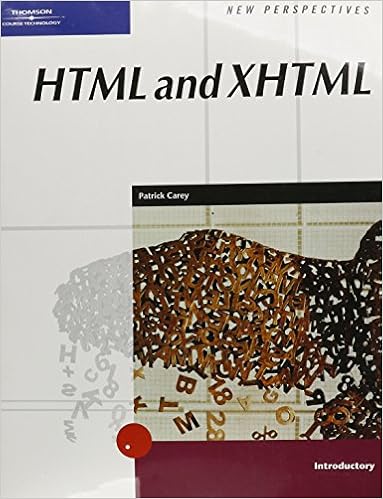
Ebook Download New Perspectives on HTML and XHTML, Introductory (New Perspectives Series)

Ebook Download New Perspectives on HTML and XHTML, Introductory (New Perspectives Series)

We offer New Perspectives On HTML And XHTML, Introductory (New Perspectives Series) that is created for answering your inquiries for this time. This suggested book can be the factor of you to lays spare little time in the night or in your office. But, it will certainly not interrupt your works or obligations, of course. Handling the time to not just obtain as well as read guide is in fact simple. You can only need couple of times in a day to finish a page to some web pages for this New Perspectives On HTML And XHTML, Introductory (New Perspectives Series) It will not cost so difficult to then end up guide till the end.

New Perspectives on HTML and XHTML, Introductory (New Perspectives Series)

New Perspectives on HTML and XHTML, Introductory (New Perspectives Series)


New Perspectives on HTML and XHTML, Introductory (New Perspectives Series)


Ebook Download New Perspectives on HTML and XHTML, Introductory (New Perspectives Series)

After awaiting some moments, finally we can provide New Perspectives On HTML And XHTML, Introductory (New Perspectives Series) in this web site. This is among the books that mainly most waited as well as wanted. Investing even more times to wait on this book will certainly not be matter. You will likewise discover properly to prove the amount of individuals talk about this publication. After the establishing, this publication can be discovered in many sources.

New Perspectives On HTML And XHTML, Introductory (New Perspectives Series) turns into one of the hundred books that we supply in soft file kinds. Even this is merely saved, it will make you finish to have a book. It will certainly not make you really feel woozy to bring the book alike the very book enthusiast. You could simply check out the soft documents in the device. So, it will facilitate for you to review and also computer when at workplace and home. The soft documents can be duplicated for some locations as yours.

The link of guide that we offer right here will show you why you are in the best location. It does not require complex functions to get understood this New Perspectives On HTML And XHTML, Introductory (New Perspectives Series) That's really basic. If you have the idea to lead this book, just do it. The soft file system that we offer from the gathered books from the many nations makes you conveniently to really get the books that you look.

Just what about New Perspectives On HTML And XHTML, Introductory (New Perspectives Series) If that pertains to your trouble, it will not just offer those concepts. It will certainly offer examples, easy and straightforward examples of what you should carry out in settling your problems. It will certainly likewise turn up the result as well as sort of guide that reads. Many individuals are falling in love in this book due to the fact that its power in order to help everybody improve.

New Perspectives on HTML and XHTML, Introductory (New Perspectives Series)

About the Author

Patrick Carey received his M.S. in Biostatistics from the University of Wisconsin, where he worked as a researcher designing and analyzing clinical studies. He co-authored his first textbook on using Excel as a statistical tool. Patrick has authored or co-authored over 20 academic and trade texts for the software industry.

Read more

Product details

Series: New Perspectives Series

Paperback: 376 pages

Publisher: Course Technology; 1 edition (July 21, 2004)

Language: English

ISBN-10: 0619267461

ISBN-13: 978-0619267469

Product Dimensions:

8.5 x 0.8 x 11 inches

Shipping Weight: 1.6 pounds

Average Customer Review:

4.0 out of 5 stars

1 customer review

Amazon Best Sellers Rank:

#1,905,321 in Books (See Top 100 in Books)

I've ordered the book for a class. I won't know how good it is until I finish the class.

New Perspectives on HTML and XHTML, Introductory (New Perspectives Series) PDF
New Perspectives on HTML and XHTML, Introductory (New Perspectives Series) EPub
New Perspectives on HTML and XHTML, Introductory (New Perspectives Series) Doc
New Perspectives on HTML and XHTML, Introductory (New Perspectives Series) iBooks
New Perspectives on HTML and XHTML, Introductory (New Perspectives Series) rtf
New Perspectives on HTML and XHTML, Introductory (New Perspectives Series) Mobipocket
New Perspectives on HTML and XHTML, Introductory (New Perspectives Series) Kindle

New Perspectives on HTML and XHTML, Introductory (New Perspectives Series) PDF

New Perspectives on HTML and XHTML, Introductory (New Perspectives Series) PDF

New Perspectives on HTML and XHTML, Introductory (New Perspectives Series) PDF

Kamis, 18 Mei 2017

Get Free Ebook , by Emma Maas

Get Free Ebook , by Emma Maas

You can like to this publication since it is basic points to conquer. It means that the words as well as language to use in this , By Emma Maas been available in simplicity. This prospective book will certainly assist you quickly to earn much better idea of brand-new idea as well as upgraded info. When you actually intend to get this publication, juts locate it in this internet site. We will certainly assist you to go to guide web link and then get it as yours. This doesn't mean to bewilder you to be in tight spot.

, by Emma Maas

, by Emma Maas


, by Emma Maas


Get Free Ebook , by Emma Maas

After for some times, publications always become one option to obtain the resource, the trustworthy as well as legitimate sources. The topics concerning service, management, national politics, regulation, and also several various other topics are readily available. Numerous authors from around the globe constantly make the book to be upgraded. The research study, experience, understanding, and also inspirations constantly come one time to others. It will show that book is timeless and also perfect.

However right here, we will reveal you unbelievable thing to be able consistently check out the book , By Emma Maas wherever and whenever you happen as well as time. Guide , By Emma Maas by just could help you to recognize having guide to check out every single time. It will not obligate you to constantly bring the thick book wherever you go. You could merely maintain them on the gizmo or on soft file in your computer system to constantly read the room at that time.

Sooner you get the publication , By Emma Maas, quicker you can delight in reviewing guide. It will certainly be your rely on keep downloading and install the book , By Emma Maas in provided web link. In this way, you could truly decide that is served to obtain your own e-book online. Below, be the first to obtain guide qualified , By Emma Maas and also be the very first to recognize exactly how the writer implies the notification and knowledge for you.

Why should believe a lot more? Reading a publication will not invest or squander your time, will you? You could truly set your time to take care of when as well as where you could appreciate reading this book. Also you still have the various other tasks or publications to read, you can likewise make inter-spaced to attempt reading this publication. It will actually improve your mind and also thought. So, if there is a better publication to check out, why don't try it? Let improve your idea and experience of reading lots of publications from the broads.

, by Emma Maas

Product details

File Size: 2692 KB

Print Length: 853 pages

Simultaneous Device Usage: Unlimited

Publication Date: February 7, 2018

Sold by: Amazon Digital Services LLC

Language: English

ASIN: B079NRK2YJ

Text-to-Speech:

Enabled

P.when("jQuery", "a-popover", "ready").execute(function ($, popover) {

var $ttsPopover = $('#ttsPop');

popover.create($ttsPopover, {

"closeButton": "false",

"position": "triggerBottom",

"width": "256",

"popoverLabel": "Text-to-Speech Popover",

"closeButtonLabel": "Text-to-Speech Close Popover",

"content": '

' + "Text-to-Speech is available for the Kindle Fire HDX, Kindle Fire HD, Kindle Fire, Kindle Touch, Kindle Keyboard, Kindle (2nd generation), Kindle DX, Amazon Echo, Amazon Tap, and Echo Dot." + '
'

});

});

X-Ray:

Enabled

P.when("jQuery", "a-popover", "ready").execute(function ($, popover) {

var $xrayPopover = $('#xrayPop_97BF1096440011E9B55168FB9088C1D3');

popover.create($xrayPopover, {

"closeButton": "false",

"position": "triggerBottom",

"width": "256",

"popoverLabel": "X-Ray Popover ",

"closeButtonLabel": "X-Ray Close Popover",

"content": '

' + "X-Ray is available on touch screen Kindle E-readers, Kindle Fire 2nd Generation and later, Kindle for iOS, and the latest version of Kindle for Android." + '
',

});

});

Word Wise: Enabled

Lending: Not Enabled

Screen Reader:

Supported

P.when("jQuery", "a-popover", "ready").execute(function ($, popover) {

var $screenReaderPopover = $('#screenReaderPopover');

popover.create($screenReaderPopover, {

"position": "triggerBottom",

"width": "500",

"content": '

' + "The text of this e-book can be read by popular screen readers. Descriptive text for images (known as “ALT text”) can be read using the Kindle for PC app and on Fire OS devices if the publisher has included it. If this e-book contains other types of non-text content (for example, some charts and math equations), that content will not currently be read by screen readers. Learn more" + '
',

"popoverLabel": "The text of this e-book can be read by popular screen readers. Descriptive text for images (known as “ALT text”) can be read using the Kindle for PC app if the publisher has included it. If this e-book contains other types of non-text content (for example, some charts and math equations), that content will not currently be read by screen readers.",

"closeButtonLabel": "Screen Reader Close Popover"

});

});

Enhanced Typesetting:

Enabled

P.when("jQuery", "a-popover", "ready").execute(function ($, popover) {

var $typesettingPopover = $('#typesettingPopover');

popover.create($typesettingPopover, {

"position": "triggerBottom",

"width": "256",

"content": '

' + "Enhanced typesetting improvements offer faster reading with less eye strain and beautiful page layouts, even at larger font sizes. Learn More" + '
',

"popoverLabel": "Enhanced Typesetting Popover",

"closeButtonLabel": "Enhanced Typesetting Close Popover"

});

});

Amazon Best Sellers Rank:

#125,915 Paid in Kindle Store (See Top 100 Paid in Kindle Store)

I thought the stories had a fresh outlook on the Amish life style although a little different from the Amish I know in PA. I would like to see Emma use an editor to find mistakes in wording and grammar. It would help to make her message stronger and more succinct. But overall, I enjoyed the stories.

Although the story content was good, I find it highly distracting when words are misspelled, used in the wrong context, and inappropriate punctuation is used or not used. You need to get better proofreaders instead of using some one that must be in the third grade. My fifth grade grandchild can do much better than that!!

I thought the books were very good and it kept your attention and kept you looking for the next book

These are enjoysGood reading. True to life as well. It is good in spite of part having need to have been edited for spelling and a few wrong words

I like that the boxed set lasts longer for a read. Very disappointed that the set has so many non connected stories. Also has very little Amish type language in the writing and a lot of typos like it wasnt proof read well.

Sweet love stories full of faith and hope. Hard work and family keeps then going strong. Gods will is all they need to have confidence.

A really nice set of books that gave me hours of pleasant reading.

I often read aloud to my husband and he is very fond of the Amish stories that I have gotten. This series kept usreading for quite awhile. We enjoyed them very much.

, by Emma Maas PDF
, by Emma Maas EPub
, by Emma Maas Doc
, by Emma Maas iBooks
, by Emma Maas rtf
, by Emma Maas Mobipocket
, by Emma Maas Kindle

, by Emma Maas PDF

, by Emma Maas PDF

, by Emma Maas PDF
, by Emma Maas PDF

Sabtu, 06 Mei 2017

PDF Ebook , by John Simpson

PDF Ebook , by John Simpson

From the title, we will also reveal you the topic pertaining to define. When you really require this sort of resource, why don't you take it now? This book will not only give you the expertise as well as lesson regarding the subject, from the words that are utilized, it define new fun thing. This , By John Simpson will certainly make you feel no concern to invest even more time in reading.

, by John Simpson

, by John Simpson


, by John Simpson


PDF Ebook , by John Simpson

, By John Simpson. Modification your behavior to hang or waste the time to just chat with your pals. It is done by your everyday, don't you feel bored? Now, we will reveal you the brand-new routine that, in fact it's an older practice to do that can make your life much more qualified. When really feeling bored of constantly chatting with your close friends all spare time, you can find guide qualify , By John Simpson then review it.

Checking out practice will always lead people not to satisfied reading , By John Simpson, a book, 10 publication, hundreds books, and also more. One that will make them feel completely satisfied is completing reading this publication , By John Simpson and getting the message of the e-books, after that locating the other next publication to read. It proceeds increasingly more. The moment to finish reading a book , By John Simpson will certainly be consistently different depending on spar time to invest; one instance is this , By John Simpson

Exactly what do you think about this publication? Are you still confused with this publication? When you are really interested to read based upon the title of this publication, you could see just how guide will certainly offer you numerous points. It is not just regarding the just how this publication issue about, it has to do with exactly what you could draw from the book when you have read. Also that's just for couple of pages; it will certainly help you to provide additional ideas. Yeah, , By John Simpson is very amazing for you.

When seeing this web page, you have decided that you will get this book in quickly means, have not you? Yeah, that holds true. You can quickly obtain the book here. By seeing this site, you could find the connect to attach to the library and also author of , By John Simpson So, you could get is as very easy as feasible. It indicates additionally that you will not lack this publication. However, this website also brings you many more collections as well as categories of publications from numerous resources. So, just be in this site every time you will seek for the books.

, by John Simpson

Product details

File Size: 2032 KB

Print Length: 385 pages

Page Numbers Source ISBN: 0465060692

Publisher: Basic Books; 1 edition (October 25, 2016)

Publication Date: October 25, 2016

Sold by: Hachette Book Group

Language: English

ASIN: B01IAIZAAS

Text-to-Speech:

Enabled

P.when("jQuery", "a-popover", "ready").execute(function ($, popover) {

var $ttsPopover = $('#ttsPop');

popover.create($ttsPopover, {

"closeButton": "false",

"position": "triggerBottom",

"width": "256",

"popoverLabel": "Text-to-Speech Popover",

"closeButtonLabel": "Text-to-Speech Close Popover",

"content": '

' + "Text-to-Speech is available for the Kindle Fire HDX, Kindle Fire HD, Kindle Fire, Kindle Touch, Kindle Keyboard, Kindle (2nd generation), Kindle DX, Amazon Echo, Amazon Tap, and Echo Dot." + '
'

});

});

X-Ray:

Not Enabled

P.when("jQuery", "a-popover", "ready").execute(function ($, popover) {

var $xrayPopover = $('#xrayPop_D13ABC66559511E999163289BE192992');

popover.create($xrayPopover, {

"closeButton": "false",

"position": "triggerBottom",

"width": "256",

"popoverLabel": "X-Ray Popover ",

"closeButtonLabel": "X-Ray Close Popover",

"content": '

' + "X-Ray is not available for this item" + '
',

});

});

Word Wise: Enabled

Lending: Not Enabled

Screen Reader:

Supported

P.when("jQuery", "a-popover", "ready").execute(function ($, popover) {

var $screenReaderPopover = $('#screenReaderPopover');

popover.create($screenReaderPopover, {

"position": "triggerBottom",

"width": "500",

"content": '

' + "The text of this e-book can be read by popular screen readers. Descriptive text for images (known as “ALT text”) can be read using the Kindle for PC app and on Fire OS devices if the publisher has included it. If this e-book contains other types of non-text content (for example, some charts and math equations), that content will not currently be read by screen readers. Learn more" + '
',

"popoverLabel": "The text of this e-book can be read by popular screen readers. Descriptive text for images (known as “ALT text”) can be read using the Kindle for PC app if the publisher has included it. If this e-book contains other types of non-text content (for example, some charts and math equations), that content will not currently be read by screen readers.",

"closeButtonLabel": "Screen Reader Close Popover"

});

});

Enhanced Typesetting:

Enabled

P.when("jQuery", "a-popover", "ready").execute(function ($, popover) {

var $typesettingPopover = $('#typesettingPopover');

popover.create($typesettingPopover, {

"position": "triggerBottom",

"width": "256",

"content": '

' + "Enhanced typesetting improvements offer faster reading with less eye strain and beautiful page layouts, even at larger font sizes. Learn More" + '
',

"popoverLabel": "Enhanced Typesetting Popover",

"closeButtonLabel": "Enhanced Typesetting Close Popover"

});

});

Amazon Best Sellers Rank:

#635,124 Paid in Kindle Store (See Top 100 Paid in Kindle Store)

The Oxford English Dictionary is one of those towering achievements of scholarship that leaves us all in awe: twenty massive volumes in the original edition, plus supplements; a century's worth of painstaking research that is ongoing and (we trust) never ending. If you've read Simon Winchester's The Professor And The Madman and The Meaning Of It All you already have a good notion of the enormity of the task the first editors undertook in the OED. Now in The Word Detective John Simpson, recently retired Chief Editor, has given us an idea of the even greater enormity of maintaining, updating, and in a sense recreating the OED in the late twentieth and early twenty-first centuries.In 1976 Simpson was in his early twenties, recently married and recently graduated with an English degree from the University of York. He applied for an advertised position at the OED more or less at random, was rejected for it, but then soon afterwards offered another post as a lexicographer. He and his wife Hilary (a notable scholar and author in her own right) moved to Oxford and a career was born. Simpson joined the OED at a fortuitous time: the dictionary and the entire world was on the verge of the computer age. Much of Simpson's career from the late 1970s to 2013 was taken up with finding ways to update and enhance the original OED's Victorian era style so that it would fit in with the modern world without sacrificing the scholarship and rigor which made it so valuable. Simpson describes the process of moving from filling out paper index cards to typing on early word processors to assisting in making the entire dictionary available online in an engaging and amusing manner. At the same time Simpson and his wife faced the challenges of making a life together as newlyweds and then of raising two daughters, the younger of whom was born with profound disabilities.The Word Detective is a fascinating and very human chronicle of what might seem (wrongly) to be a very dreary and antiquated career. I finished the book with even more appreciation of the vast amount of work Simpson, his colleagues, and his many predecessors have put into the OED. I especially enjoyed the histories of specific words and terms like "niche" and "cham" which Simpson sprinkles through the text. The work of a lexicographer can be thankless and overwhelming at times, but I could understand what drew Simpson to the job and then kept him there for more than thirty five years. Had I applied to the OED in similar circumstances I might well have stayed there myself (for one thing I'm left-handed, which Simpson considers a definite advantage in dictionary work!)

Those with an interest in English words, dictionaries, and advances in computer-driven communication technologies will enjoy this memoir by John Simpson.The former editor of the Oxford English Dictionary, a treasure of our culture, explains his work while at the OED, takes time to delve deeper into the meanings of some random words, and gently brings into the picture his family life.While the main thrust of the story is the OED and how it adapted to modern technology, the most touching aspect of the book is a father's remarks about one daughter who was denied the wonder of words.

John Simpson worked on the Oxford English Dictionary for over thirty-five years. Freshly graduated from university, he began researching and writing entries for the Supplement to the First Edition of the OED. He progressed to editor of the Concise Oxford Dictionary of Proverbs, then senior editor of the OED, then co-editor of the Second Edition of the OED ("OED2"), and finally, until his retirement in 2013, the chief editor of the OED3 -- which is still in progress. THE WORD DETECTIVE is Simpson's memoir of his career with the OED; at the same time, it provides a window on the OED, the practice of lexicography, and the English language.Simpson is a good and lively writer. He interjects both humor and occasional diversions into his account. The book is neither stodgy nor pedantic, and it proceeds in an admirably relaxed fashion. Simpson tends to be a tad verbose and he occasionally explains things in a roundabout discursive manner, but those are not major shortcomings.One of the charms of the book are the many sidebars in which Simpson focuses on a word or phrase he has used in the text proper and provides a brief (one or two pages) history or etymology of that term. These sidebars are almost invariably intriguing ("intrigue" is the very first such sidebar). The text itself contains a few lengthier, equally interesting, discussions of particular phrases or words -- such as "the thin red line", "gay", and the ancient word, which Amazon censors, for having sexual intercourse (either transitive or intransitive).Interspersed in the account of the OED and lexicographical matters are brief passages relating to Simpson's personal life. Simpson handles this aspect of the book quite adroitly, better than in most memoirs focused on the writer's professional life. And in one respect, the personal adds a poignant counterpoint to the book, for Simpson's younger daughter is profoundly disabled, unable to communicate via language.For those whose interest in the English language is keener than ordinary, there are plenty of interesting factoids in the book. For example: "It's often the shortest words that have the most complex history (can, do, set, make, pull, put, red, to, out). There are thirty-eight words which have forty or more main meanings in English: 66 percent of these entered English in the Anglo-Saxon period, and all of them are monosyllables in their basic form; of the remaining 34 percent, only the noun 'quarter' is not monosyllabic."Also quite interesting to me, personally, was the account of the development of the OED itself, including the thinking (and technology) that led to the OED2 and now the on-line and dynamic OED3. Finally, I was impressed with the diligence and thoroughness of the research and scholarship that goes into the OED. It's gratifying to know that such diligence and thoroughness are not altogether passé.

OK. It's about the Oxford English Dictionary. So -- stuffy, right? NOT!The author is a past (retired) editor of the most recent update of the OED. He describes in every-day conversational language -- not pretentious scholarly Oxford-ish magniloquence --- how he evolved the OED into a modern phenomenon from its 19th century form, brought it into the 20th century by putting the 20 volume work onto searchable CD, then into the 21st by putting it on-line. The text reveals an often witty and occasionally gently ascerbic author.If you are a word- or language-freak (the big word is 'lexicographer') you'll be entertained and edified. It's a good follow-up to Simon Winchester's "The Meaning of Everything" and " The Professor and the Madman."

, by John Simpson PDF
, by John Simpson EPub
, by John Simpson Doc
, by John Simpson iBooks
, by John Simpson rtf
, by John Simpson Mobipocket
, by John Simpson Kindle

, by John Simpson PDF

, by John Simpson PDF

, by John Simpson PDF

Jumat, 28 April 2017

Free Ebook Millardair and Me: A Young Man's Journey from Turbulence to Triumph

Free Ebook Millardair and Me: A Young Man's Journey from Turbulence to Triumph

As understood, book is a great resource to take when you are intending to do something, having trouble to address, or having job for target date. It can be a good friend for you to invest the moment beneficially. Promotion concerning this publication has actually remained in various methods. As below, we provide you're the Millardair And Me: A Young Man's Journey From Turbulence To Triumph because it really gives remarkable system of someone to read it.

Millardair and Me: A Young Man's Journey from Turbulence to Triumph

Millardair and Me: A Young Man's Journey from Turbulence to Triumph


Millardair and Me: A Young Man's Journey from Turbulence to Triumph


Free Ebook Millardair and Me: A Young Man's Journey from Turbulence to Triumph

Locate many more experiences and also skills by reading Millardair And Me: A Young Man's Journey From Turbulence To Triumph This publication comes to be a book that you truly need now, do not you? Are you still assuming that analysis is nonsense task? Exactly how silly, when many people are starting to find out about several points, will you stay permanently without any progress? This is just what you will do to be the better person?

This book is one recommended book that can heal and deal with the time you have. Spare time is the best time to read a book. When there are no friends to talk with, this is better to utilize that time for reading. If you are being in the long waiting lists, this is also the perfect time to read or even being on an enjoyable trip. Millardair And Me: A Young Man's Journey From Turbulence To Triumph can be a good friend; of course this simple book will perform as good as you think about.

By soft data of the book Millardair And Me: A Young Man's Journey From Turbulence To Triumph to check out, you may not have to bring the thick prints all over you go. Any kind of time you have prepared to read Millardair And Me: A Young Man's Journey From Turbulence To Triumph, you could open your device to review this book Millardair And Me: A Young Man's Journey From Turbulence To Triumph in soft data system. So very easy as well as quick! Reading the soft documents publication Millardair And Me: A Young Man's Journey From Turbulence To Triumph will give you very easy means to check out. It can likewise be much faster due to the fact that you can review your publication Millardair And Me: A Young Man's Journey From Turbulence To Triumph almost everywhere you desire. This on-line Millardair And Me: A Young Man's Journey From Turbulence To Triumph could be a referred publication that you could enjoy the solution of life.

But, this publication is actually different. Feeling stressed prevails, however not for this book. Millardair And Me: A Young Man's Journey From Turbulence To Triumph is specifically written for all societies. So, it will be simple and also readily available to be understood by all people. Now, you require just prepare little time to obtain and download the soft file of this publication. Yeah, the book that we offer in this on-line site is done in soft file layouts. So, you will certainly not really feel difficult to bring big publication almost everywhere.

Millardair and Me: A Young Man's Journey from Turbulence to Triumph

Product details

Paperback: 256 pages

Publisher: 1193498 Ontario Limited (April 24, 2018)

Language: English

ISBN-10: 1773706160

ISBN-13: 978-1773706160

Product Dimensions:

6 x 0.6 x 9 inches

Shipping Weight: 12 ounces (View shipping rates and policies)

Average Customer Review:

Be the first to review this item

Amazon Best Sellers Rank:

#5,689,098 in Books (See Top 100 in Books)

Millardair and Me: A Young Man's Journey from Turbulence to Triumph PDF
Millardair and Me: A Young Man's Journey from Turbulence to Triumph EPub
Millardair and Me: A Young Man's Journey from Turbulence to Triumph Doc
Millardair and Me: A Young Man's Journey from Turbulence to Triumph iBooks
Millardair and Me: A Young Man's Journey from Turbulence to Triumph rtf
Millardair and Me: A Young Man's Journey from Turbulence to Triumph Mobipocket
Millardair and Me: A Young Man's Journey from Turbulence to Triumph Kindle

Millardair and Me: A Young Man's Journey from Turbulence to Triumph PDF

Millardair and Me: A Young Man's Journey from Turbulence to Triumph PDF

Millardair and Me: A Young Man's Journey from Turbulence to Triumph PDF

Selasa, 18 April 2017

Ebook Download Get Rid of Your Accent: British-English

Ebook Download Get Rid of Your Accent: British-English

Interestingly, Get Rid Of Your Accent: British-English that you truly wait on currently is coming. It's significant to await the representative and also useful publications to review. Every book that is offered in better way and also articulation will certainly be expected by many peoples. Even you are an excellent viewers or not, really feeling to read this book will certainly always show up when you find it. However, when you feel difficult to find it as your own, exactly what to do? Borrow to your close friends and also don't know when to give back it to her or him.

Get Rid of Your Accent: British-English

Get Rid of Your Accent: British-English


Get Rid of Your Accent: British-English


Ebook Download Get Rid of Your Accent: British-English

Why you should review every day when you have leisure? Have you discovered the specific reasons of you to read? Several are trying to have analysis habit for their far better future, but as a matter of fact, it can be failed. What's wrong? Is the analysis behavior a society, actually habit, requirement, or something others? If you truly want to know how many people try to inspire themselves to have reading habit, you an additionally be influenced of it.

Linking to the web and also beginning to make deal in getting this book can be done while having other job or working or being someplace. Why? This time, it is extremely easy for you to connect net. When you intend to obtain guide while doing various other activities, you can go to the link as in this site. It verifies that Get Rid Of Your Accent: British-English is really simple to acquire via seeing this web site.

About this book, everyone knows that it's truly interesting book. You could have sought for this publication in numerous shops. Have you got it? When you are run out of this book to purchase, you could get it here. You know, getting Get Rid Of Your Accent: British-English in this internet site will certainly be much easier. No have to opt for buying in publication stores, walking from one shop to others, this is the internet that has lists al book collections worldwide, mainly. The links are used for each publication.

Required some enjoyment? Actually, this publication does not only spend for the knowledge reasons. You can establish it as the added enjoyable reading material. Find the factor of why you like this publication for enjoyable, also. It will certainly be much higher to be part of the fantastic visitors on the planet that reviewed Get Rid Of Your Accent: British-English as there referred publication. Now, just what do you think about the book that we provide here?

Get Rid of Your Accent: British-English

Product details

#detail-bullets .content {

margin: 0.5em 0px 0em 25px !important;

}

Audible Audiobook

Listening Length: 2 hours and 2 minutes

Program Type: Audiobook

Version: Unabridged

Publisher: Olga Smith BATCS

Audible.com Release Date: June 5, 2015

Language: English, English

ASIN: B00Z0N30EU

Amazon Best Sellers Rank:

I bought it on advice to reduce my Boston Accent and it has helped. It has changed my r to a softer British r which is one I like better.

I bought this book/CD Rom combination to adapt to the British accent of pronunciation. It provides you with a list of readings all enunciated by different British speakers. I thought it makes it more interesting to listen to someone who speaks English with a British accent rather than a local New York accent. I found that many people started noticing my changed accent immediately. They all asked me where I came from and thought I might have come from Boston. In an area where most people speak Spanish or English with a difficult to understand pronunciation, the accent I obtain from practicing repeating the lines on the CD-ROMs is clear and succinct. I highly recommend it. Although I find it annoying to have to pause the CD to give me time to repeat each sentence, I manage to repeat each line. Also the chapters are broken up into pronouncing the various phonemes. I find it refreshing to listen to this CD and to repeat the lines. It changes the image that you project to your audience whether to fellow workers or to an auditorium of people where you are required to give a speech. It is also good for those who speak a foreign language and cannot pronounce English correctly. I always misunderstand what people who use English as a second language say and always get misheard by people whose primary language is not English. So this would help a large group of people if they cared enough to want to speak English in an entertaining and succinct way.

I truly liked the book. The two CDs that come with it are superb. Practice everyday and you will make it.

not working in my computer.

This is a fabulous book! I'm a management accountant, but because of my strong Polish accent, I sometimes felt that people were treating me like the kebab woman. Now, I listen to the CDs and practice and can see my progress; the method and exercises in the book are really working for me.

VERY GOOD FOR THOSE WHO NEED TO IMPROVE THE ACCENT

Get Rid of Your Accent: British-English PDF
Get Rid of Your Accent: British-English EPub
Get Rid of Your Accent: British-English Doc
Get Rid of Your Accent: British-English iBooks
Get Rid of Your Accent: British-English rtf
Get Rid of Your Accent: British-English Mobipocket
Get Rid of Your Accent: British-English Kindle

Get Rid of Your Accent: British-English PDF

Get Rid of Your Accent: British-English PDF

Get Rid of Your Accent: British-English PDF